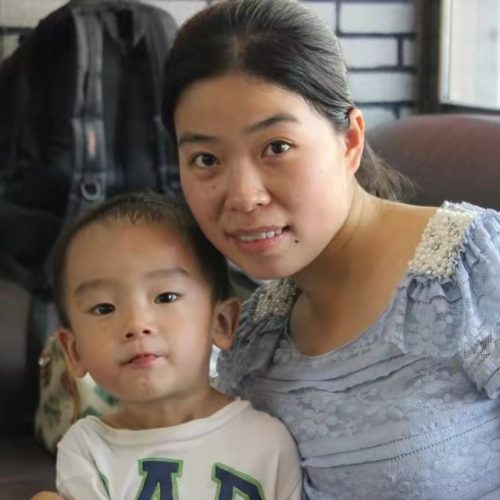


This story was inspired by my waigong—my mother-side grandfather. He worked as a construction foreman, and he was diagnosed with lumbar disc herniation because of overexertion on the site. The doctor told him he couldn’t do his job anymore, but on the way back, he went to the church on the first floor of his apartment and the elder prayed for him. He was then healed, and after his retirement, became a pastor. He currently leads five local churches, and he has dedicated his whole life to the Lord. Most of the details are fictional—the hospital, the details about the site, the van—but I researched what it would have looked like. My grandfather’s name is Kai En Lin, and my grandmother’s name is Sai Xian Lin. Wang is made up. In my interview, my grandfather, Kai, told me about his childhood. He grew up in an island village with very little food, so he had to work hard to eat. In Nanchang City, he worked hard enough to make his family the higher middle class. This story is not just fiction—it’s also a testimony.
Healed
Kai had spent years changing the city with his own hands—brick by brick, beam by beam. It was an ordinary morning on the site—or so he thought.
Kai looked down from the rusty scaffolding. “Wang!” He bellowed, “get the bricks up here, now!” He watched as his co-worker scrambled to get the bucket of bricks and attached it to the rope. Once the bucket was firmly secured, Kai began lifting it, his muscles hard and strong from the countless hours he had spent on the construction site.
Being a foreman was not easy. Not only did he have to manage all of his co-workers, he also had to get up in the scaffold. Many of his workers were untrained, straight from the rural areas far from Nanchang city. Part of his job was to train his inexperienced co-workers on the site. But as tiring as it was, it made him enough money to feed his family of five.
On the high scaffolding, Kai looked out over the city. He remembered what it was like to grow up poor and with so little food that he had to eat fried rice husks. He remembered resolving, as a child, to escape his island village and to work in the city. After marrying, he and his wife, Xian, had moved to Nanchang City. Kai was earning money for his kids so that they wouldn’t have to grow up like he did.
Kai hauled the bucket off the hook. As he bent for a brick, a white-hot pain tore through his hip, and he crumpled to his knees. It was so sharp, so intense, so sudden, that Kai dropped to his knees, narrowly avoiding falling off the scaffolding. The hammer on his belt fell off, clanging against steel beams three stories down.
“Boss!” Wang yelled, his voice cracking. Other workers had gathered, some frozen, others whispering urgently among themselves.
Kai tried to move—another bolt of pain seared his leg. “Help me!” he cried to the crowd below. For a moment, no one moved, until one of the men ran to the nearest telephone, calling the hospital.
A few minutes later, four men came up the scaffold and tied Kai to the rope connected to the pulley. They lowered him from the rope carefully, and a few people at the bottom carried Kai to a stretcher. Kai lay still on the stretcher as the four men who helped him down carried him onto a green, boxy danwei van and tied him down to prevent him from slipping. Then, they sat against the walls around him.
The van rattled and shook over the dusty, uneven roads on its way to the hospital. Rocks and potholes jostled the van. Kai passed out.
When he woke up, he looked around. He was in a hospital room with no windows. There were flickering fluorescent tubes humming on the ceiling, making the room bright but cold. He smelled the distinct odor of the hospital—sanitizer with a hint of iodine. He heard a doctor talking to a woman outside the door.
“It won’t heal,” the doctor explained, “because we don’t currently have a way to treat this condition.”
“So is it fatal?” The woman, whom Kai identified as his wife, Xian, sounded like she was about to cry.
The doctor paused for a moment, checking his information. “This condition usually isn’t fatal—but it could severely hinder your husband’s work. And…” the doctor seemed to be afraid to break the news to Xian.
“What is it, doctor?” Xian asked with urgency.
“Your husband, Kai…he will most likely be paralyzed for the rest of his life if he exerts his nerves any more.”
Just then, the doctor entered the room with Xian.
“It’s bad, Mr. Lin. If you keep working like before… you could be paralyzed for the rest of your life.” The doctor was professional and indifferent. Did he know that this news would ruin Kai’s entire family?
Kai was too tired to say anything. The doctor called two men to carry Kai back to his apartment on a stretcher. After ten minutes of being carried across the hot streets, Kai arrived home at his apartment. With Xian’s assistance, Kai carefully limped up the stairs, trying not to apply too much pressure to his hip. He was thankful that he had chosen the second floor when he just arrived at Nanchang.
When he got home, Kai went straight for his bed. He heard his children watching TV in the other room, completely oblivious to the fact that their father’s life and career were ruined. He remembered how excited they had been when he brought the TV home—how proudly they’d told their friends that their family owned one, something few families could afford. Now, lying there with fear settling in his chest, Kai realized he wouldn’t be able to buy anything new again. At this rate, they would be lucky just to be able to afford enough food.
He slumped back onto his pillow. The realization came crashing down on him like a heavy wave of sadness and desperation. He would never be a normal man again. There would be no new purchases, perhaps not even food for the next few months. Kai had never been known to cry. He was a tough person, shaped by his hard circumstances. But this time, a tear came rolling down his cheek. His life was pointless now! Construction was all he could ever do, and now, it had been denied from him.
He lay still, listening to the muffled sounds of his home: the creak of the wind through the windows, his children’s laughter. Then, another sound slowly drifted in—singing.
It wasn’t dramatic, it wasn’t accompanied by drums or guitars or grand pianos, but it was sincere. He listened as they sang of joy and sadness, of faith and love, of pain and suffering, and of a savior that met people in their weakness
He had heard this group of people before, but he had never paid much attention to them. Now, when he was at the lowest he had ever been in his life—hurt, scared, fearful—the singing felt like the way out.
“Xian,” he whispered, his voice hoarse. “Help. I want to go downstairs.”
With Xian’s assistance, Kai slowly limped down the stairs. Each step sent a faint pain through his hip, but he leaned on her and kept going. They followed the voices to a small room at the end of the corridor. It was a dusty room, with chipped wood benches, a cement floor and a dusty atmosphere illuminated by a single lightbulb that cast a warm glow over the faces gathered there. Despite the slightly shabby surroundings, the people looked genuinely happy.
Then the singing stopped. Kai felt every eye look at him—towards his unsteady posture, his red eyes, the pain in his face. A man near the front spoke up.
“Welcome! Please take a seat—here, next to Yen.”
Kai was surprised by how easily the people accepted him. They didn’t question him, to them, he was another man, their equal. The man who had welcomed Kai started to speak, explaining about God and his son, Jesus—the one who healed the sick, comforted the mourner, and found the lost.
Kai was drowning in thoughts. If there was a God, didn’t that mean he made Kai crippled? If Jesus had really loved him, why would he allow Kai to be hurt like this? Couldn’t Jesus heal him, like he had healed so many people in his time?
When the talk ended, the group formed a circle. Heads bowed, eyes closed, the leader prayed, thanking God for each person there and asking for protection, strength, and healing for both the body and the spirit.
Then Kai felt something. It was like a breeze, something moving through the room. He opened his eyes, uncertain what it was. Without thinking, Kai shifted his weight to his bad leg and waited for the stab of pain.
It didn’t come.
From that day on, Kai’s life became different. He returned to the gatherings every week, back to the people and the God that had reached him in his darkest hour. Over time, he learned more about God, and eventually he became a pastor—guiding others with the same love that the man had guided him with.
用AI 翻译成了中文:
,把自己的一生都奉献给了主。
故事中的大多数细节都是虚构的——医院、工地的具体情况、那辆面包车——但我查阅了资料,尽量还原当时的样子。我的外公名叫林开恩,外婆名叫林赛仙。王这个人物是虚构的。
在采访中,我的外公林开恩告诉我他童年的经历。他在一个岛屿村庄里长大,食物非常匮乏,因此必须拼命工作才能吃饱。在南昌市,他通过努力工作,使家人过上了中上阶层的生活。这个故事不仅是虚构作品——它也是一份见证。
凯用自己的一双手改变了这座城市——一砖一瓦,一梁一柱。那天清晨,在工地上看似和平常没什么不同——至少他是这么认为的。
凯站在生锈的脚手架上向下望去。
“王!”他大喊,“快把砖头送上来!”
他看着同事慌忙将一桶砖头绑到绳子上。桶固定好后,凯开始往上拉。无数个小时在工地上的劳作,让他的肌肉结实而有力。
当工头并不容易。他不仅要管理工人,还要亲自爬上脚手架。许多工人都是刚从南昌城外偏远农村来的,没有受过专业训练。凯的工作之一就是在工地上培训这些新手。尽管辛苦,但这份工作能养活他一家五口。
站在高高的脚手架上,凯俯瞰着整座城市。他想起自己贫穷的童年——食物少到只能吃炒稻壳。他记得小时候下定决心要离开那个岛屿村庄,到城市里打拼。结婚后,他和妻子赛仙搬到了南昌市。凯努力赚钱,只为让孩子们不必像他一样长大。
凯把砖桶从钩子上卸下来。就在他弯腰去拿砖头的瞬间,一阵撕裂般的剧痛猛然穿过他的髋部。他双膝跪地,差点从脚手架上跌落。腰间的锤子掉了下去,在三层楼下的钢梁上发出刺耳的撞击声。
“老板!”王惊恐地喊道。其他工人聚了过来,有的愣住了,有的低声急切地议论着。
凯试图移动身体——另一阵剧痛瞬间袭来。
“救我!”他朝下面的人群喊道。
片刻的迟疑后,一名工人冲向最近的电话,拨打了医院的电话。
几分钟后,四名工人爬上脚手架,将凯绑在滑轮的绳索上,小心翼翼地把他放了下来。底下的人把凯抬上担架,送进了一辆绿色、方方正正的单位面包车,并把他固定好,防止滑动。工人们靠着车厢坐下。
面包车在通往医院的尘土路上颠簸前行,石块和坑洞不断晃动着车身。凯失去了意识。
醒来时,他发现自己躺在一间没有窗户的病房里。天花板上的荧光灯闪烁着,嗡嗡作响,让房间显得明亮却冰冷。空气中弥漫着消毒水混合着碘酒的味道。他听见门外医生和一名女人在交谈。
“这种情况无法痊愈,”医生解释道,“目前我们没有办法治疗。”
“那会致命吗?”凯认出那是妻子赛仙的声音,几乎要哭出来。
医生停顿了一下,查看资料。
“通常不会致命——但会严重影响他今后的工作。而且……”
“而且什么,医生?”赛仙急切地问。
“你的丈夫凯……如果再继续用力,他很可能会终身瘫痪。”
这时,医生和赛仙一起走进了病房。
“林先生,情况很严重。如果你像以前那样继续工作……你可能会终身瘫痪。”
医生的语气冷静而专业。他是否知道,这句话几乎毁掉了凯整个家庭?
凯已经疲惫得说不出话来。医生叫来两名男子,用担架把凯送回家。十分钟后,在炎热的街道上被抬着前行,凯回到了他的公寓。在赛仙的搀扶下,他小心翼翼地爬上楼梯,尽量不让髋部受力。他庆幸当初刚来南昌时选择了二楼。
回到家后,凯径直走向床铺。他听见孩子们在另一个房间里看电视,笑声不断,完全不知道父亲的人生和事业已经崩塌。他想起当初把电视带回家时孩子们有多兴奋——他们骄傲地告诉朋友,自己家里有电视,这在当时是件稀罕事。
而现在,凯躺在那里,恐惧在胸口蔓延。他知道,自己再也买不起新东西了。照这样下去,连吃饱饭都成了问题。
他倒在枕头上,悲伤和绝望如巨浪般席卷而来。他再也不是一个“正常”的男人了。建筑是他唯一会做的事,而现在,这条路被彻底夺走了。
凯从不轻易落泪。艰难的生活塑造了他的坚强。但这一次,一滴泪顺着他的脸颊滑落。他的人生已经毫无意义了。
他静静地躺着,听着家里的声音:窗外的风声、孩子们的笑声。忽然,另一种声音慢慢传来——歌声。
那不是激昂的音乐,没有鼓声、吉他或钢琴,但却无比真诚。歌声中唱着喜乐与忧伤,信心与爱,痛苦与患难,还有一位在软弱中与人相遇的救主。
凯以前也听过这群人唱歌,却从未在意。如今,在人生最低谷——受伤、害怕、绝望之时,这歌声仿佛成了唯一的出路。
“赛仙,”他低声说,嗓音沙哑,“帮我。我想下楼。”
在赛仙的搀扶下,凯慢慢走下楼梯。每一步都传来隐隐的疼痛,但他靠着她,坚持走完。他们循着歌声,来到走廊尽头的一间小屋。
屋子布满灰尘,木质长椅破旧,水泥地冰冷,一只灯泡散发出温暖的光,照亮了一张张面带喜乐的脸。尽管环境简陋,人们却看起来由衷地快乐。
歌声停下了。凯感觉所有人的目光都投向了他——他不稳的步伐、通红的眼睛、写满痛苦的脸。前排的一名男子开口说道:
“欢迎!请坐——坐在严旁边吧。”
凯惊讶于他们的接纳。没有质疑,没有评判,对他们而言,他只是另一个人,是平等的一员。
那名欢迎他的男子开始讲述上帝和他的儿子耶稣——医治病人、安慰忧伤、寻找迷失之人的那一位。
凯的思绪翻涌不止。如果真的有神,那不是他让凯变成残废的吗?如果耶稣真的爱他,为什么会让这样的事发生?如果耶稣曾医治那么多人,难道不能医治他吗?
讲道结束后,众人围成一个圆圈,低头闭眼。带领者祷告,感谢神赐下每一个人,并祈求保护、力量,以及身体和灵魂的医治。
就在那一刻,凯感觉到有什么发生了。仿佛一阵微风穿过房间。他睁开眼睛,不确定那是什么。几乎是下意识地,他把重心放在那条受伤的腿上,等待着熟悉的剧痛。
但——它没有出现。
从那一天起,凯的人生彻底改变了。他每周都回到这些聚会中,回到那群人中,也回到那位在黑暗中触碰他的神那里。渐渐地,他更多地认识了SD,最终成为了一名牧师,用同样的爱去引导他人——正如当初他也被引导一样。